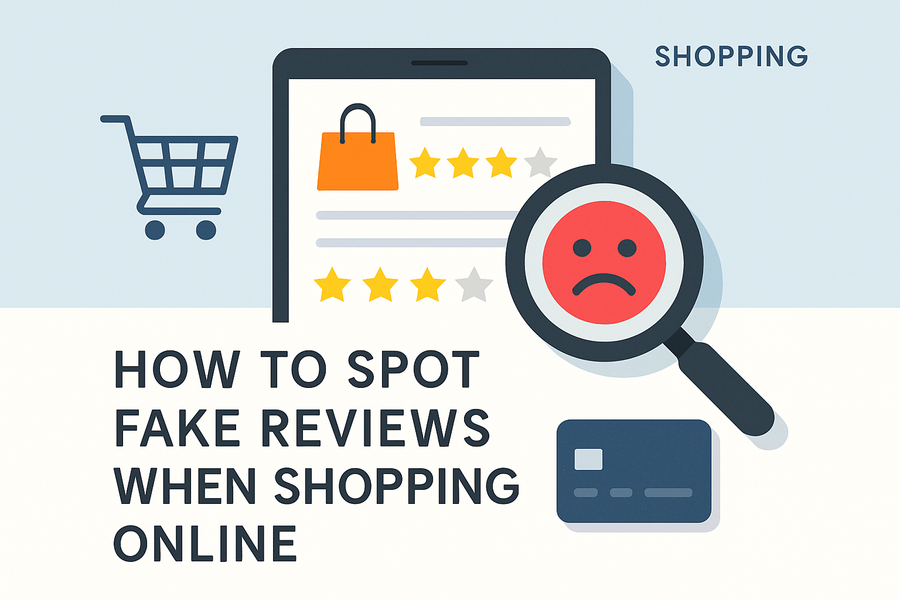
How to Spot Fake Reviews When Shopping Online
Introduction
Online shopping has revolutionized the way we buy everything from electronics to skincare. But with convenience comes one major downside—fake reviews. These deceptive testimonials can make a mediocre product appear like the best on the market, leading you to waste time and money. Fortunately, with a bit of digital savvy, you can learn to spot fake reviews and shop smarter.
1. Check the Language
Authentic reviews often sound natural and balanced. Watch out for:
- Overly enthusiastic or promotional language (e.g., "This is the best product in the universe!")
- Repetitive phrasing that mimics marketing copy
- Lack of specific details about the product’s use
Fake reviewers may try too hard to sell the product without explaining their real experience.
2. Look at the Reviewer’s Profile
Click on the reviewer's name or profile if possible. Reliable indicators include:
- A history of diverse reviews across different products and categories
- Balanced ratings (not all 5-stars)
- Verified purchase badges
If a profile has only reviewed a single item or only posts glowing reviews, it may not be trustworthy.
3. Examine the Review Dates
Reviews posted in a very short time span with similar wording may point to fake activity. If a product suddenly gets dozens of high-rated reviews within days, that's a red flag—especially for newer listings.
4. Be Wary of Generic Praise
Genuine reviewers talk about:
- Specific features they liked or disliked
- How the product performed over time
- Comparisons to other items they’ve tried
Fake reviews tend to be vague and focus on generic praise without mentioning real-life use cases.
5. Use Review Analysis Tools
Websites and browser extensions like Fakespot or ReviewMeta analyze reviews for authenticity. They look at patterns, reviewer history, and linguistic cues to give you a reliability score for product reviews.
6. Read a Mix of Positive, Negative, and Neutral Reviews
Don’t just read the 5-star reviews. Check:
- 3-star reviews for balanced pros and cons
- 1- and 2-star reviews for common complaints
- Long-form reviews for detailed experiences
The more angles you read, the better picture you'll have of the product’s true quality.
Conclusion
Fake reviews are a growing problem in online shopping, but being aware of the signs can help you make smarter decisions. From analyzing language and reviewer profiles to leveraging tech tools, there are several ways to protect yourself. The next time you add something to your cart, take a few extra minutes to vet the reviews—it could save you a lot of hassle in the long run.